.webp)
It Takes Two: The Hidden Complexity of Asymmetric Cooperation and Why Communication Determines Success
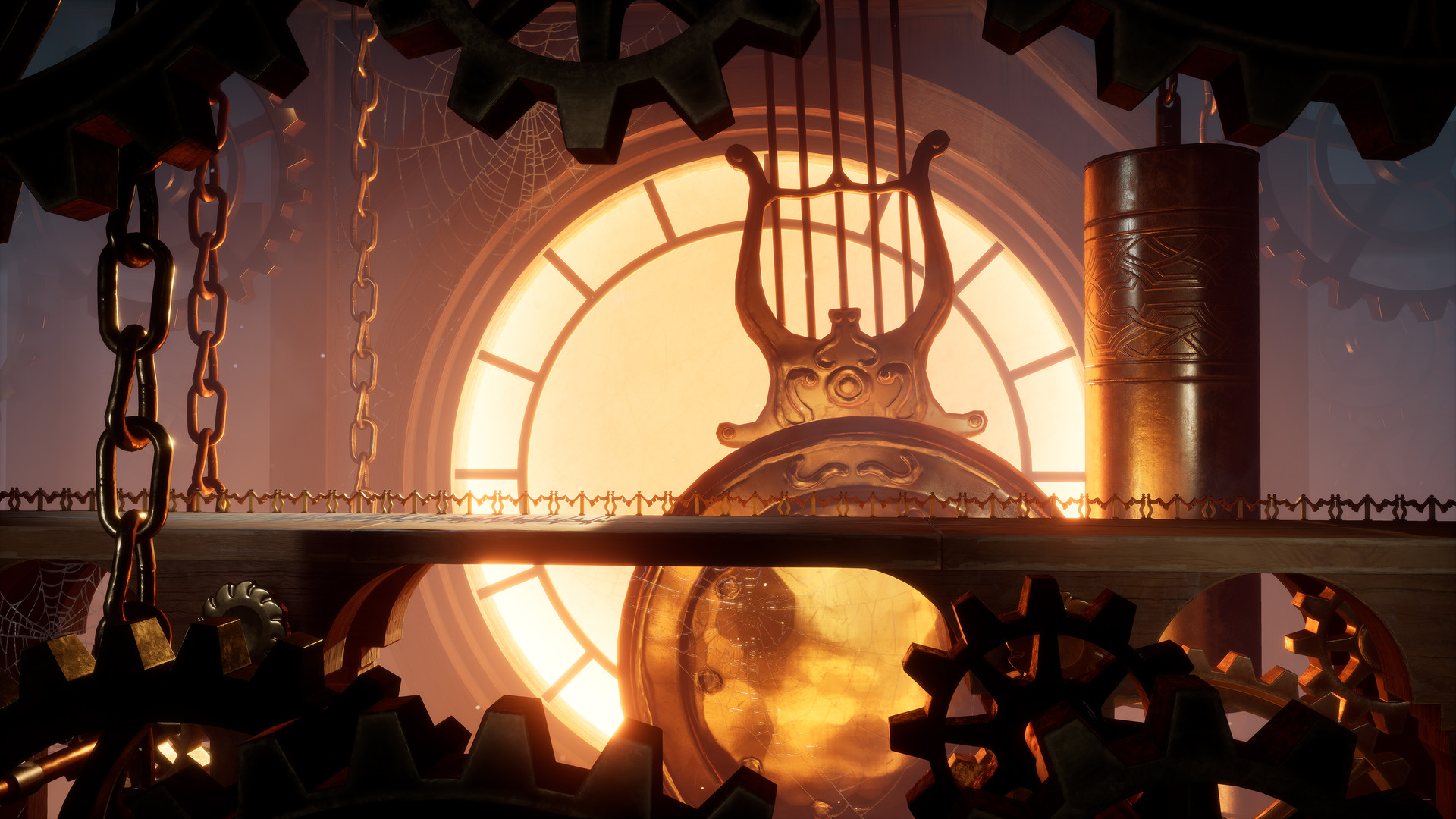
It Takes Two is often celebrated for its imaginative levels, inventive puzzles, and constantly changing gameplay. Yet beneath its colorful presentation lies a specific design challenge that makes the experience far more interesting than a conventional cooperative platformer: how to make two players with different abilities depend on each other without allowing either player to become merely a passenger.
Developed by Hazelight Studios, It Takes Two follows Cody and May, a married couple transformed into small dolls as they attempt to repair their fractured relationship. Their journey takes them through a series of environments in which cooperation is not an optional bonus. It is the fundamental requirement for progress. Players must coordinate jumps, activate mechanisms, combine abilities, overcome enemies, and solve puzzles that cannot be completed independently.
The most important feature of this design is that cooperation constantly changes its form. One player might control a mechanism while the other navigates a dangerous route. Later, both players may receive different tools that must be used together in real time. A strategy that works in one section can become useless in the next, forcing players to communicate, observe, and adapt.
This creates a deeper problem than simply learning controls. Players must develop a shared understanding of what the game expects from them, even when neither person initially knows the correct solution. Their success depends on distributing responsibility, interpreting visual clues, managing timing, and recovering from mistakes without allowing frustration to disrupt teamwork.
Understanding this system reveals why It Takes Two works so well as a cooperative experience—and why the same mechanics can become surprisingly difficult when two players have different skill levels, communication styles, or approaches to problem-solving.
1. The Beginning: Why Two Players Must Learn to Think as One Team
At the beginning of It Takes Two, Cody and May are not naturally effective partners. Their relationship is strained, and their transformation into dolls forces them to depend on each other in unfamiliar circumstances. This narrative setup mirrors the actual cooperative structure: neither character can simply complete the journey alone.
The first important lesson is that cooperation requires more than standing near another player. Each person must understand what the other can do, recognize when assistance is necessary, and communicate intentions before committing to an action. A jump that appears straightforward to one player might depend on the other player activating a platform, opening a route, or providing a temporary opportunity.
This is particularly important because the game introduces its cooperative ideas through physical interaction rather than lengthy explanations. Players discover the rules by experimenting with objects, observing environmental responses, and learning how their actions affect their partner. The opening stages therefore function as a tutorial in shared attention: both players gradually learn to watch the environment and each other.
Learning the Difference Between Individual Skill and Team Skill
Individual skill still matters. Players must move accurately, control jumps, recognize hazards, and understand their assigned abilities. However, individual competence does not guarantee success when a puzzle requires synchronized action.
One player can execute a perfect jump and still fail if the other has not activated the required mechanism. Likewise, a player can understand a puzzle's solution but remain unable to complete it without the partner's cooperation.
This creates two separate performance requirements:
- Individual execution: controlling movement, aiming tools, jumping, and reacting to hazards.
- Collective execution: agreeing on a plan, coordinating actions, and adjusting when one player's timing differs from the other's.
The game becomes easier when players stop evaluating every failure as an individual mistake. Many failures happen because the team has not established a reliable method for combining its abilities.
Establishing a Basic Communication System
At first, players do not need complicated tactical discussions. Simple communication is often enough.
Before attempting a difficult sequence, they can identify who will act first, which mechanism must be activated, and when the second player should move. Even short statements such as “wait,” “go now,” or “I am ready” can eliminate confusion.
The goal is not to communicate constantly. It is to communicate the information that affects the next decision.
2. Early Puzzles: Understanding the Difference Between Cooperation and Coordination
As the opening environments introduce more elaborate interactions, the game begins distinguishing cooperation from coordination. Cooperation means that two players contribute to a shared objective. Coordination means that their contributions occur in the correct relationship to each other.
A puzzle may require both players to activate separate mechanisms, but that does not necessarily mean they must activate them simultaneously. Another puzzle may involve one player creating an opportunity that exists only briefly, requiring the partner to respond immediately. Understanding this difference is essential because applying the wrong timing strategy can make a simple puzzle feel unnecessarily difficult.
Players often make the mistake of moving as soon as they understand their own role. However, understanding an individual task does not mean the overall sequence is ready to begin. The other player may still be positioning themselves, preparing an ability, or trying to understand which part of the environment matters.
Reading the Environment as a Shared Puzzle
The environment frequently communicates the intended relationship between two actions through spatial arrangement, movement, color, or visible mechanisms. A platform positioned beyond a gap may indicate that one player needs to create access for the other. A switch connected to a moving object can suggest a cause-and-effect relationship.
Instead of immediately trying random actions, both players should examine the scene and explain what they notice. One player might identify the mechanism, while the other recognizes the route that mechanism affects. Combining these observations can reveal the solution more quickly than either player working independently.
A Practical Puzzle-Solving Sequence
- Observe the environment before activating anything.
- Identify the objects that appear interactive.
- Determine which player can affect each object.
- Explain how one action might influence the other player's route.
- Agree on the order of actions.
- Test the solution and adjust based on the result.
This approach turns trial and error into structured experimentation.
Why Random Button Pressing Often Fails
Experimentation is valuable, but uncoordinated experimentation can create noise rather than useful information. If both players activate different objects at the same time, they may not understand which action produced a particular result.
A better approach is to change one important variable at a time. If a platform moves after a switch is activated, observe that relationship before introducing another action. This makes the game's feedback easier to interpret and helps both players build a shared understanding of the puzzle.
3. The First Major Challenge: Asymmetric Abilities Create Mutual Dependence
One of It Takes Two's defining mechanics is its use of temporary, chapter-specific abilities. Cody and May frequently receive different tools, meaning that their individual capabilities are intentionally incomplete. The game uses this asymmetry to create puzzles in which neither player possesses everything needed for success.
This is a particularly effective cooperative design because it prevents one player from permanently becoming the team's universal problem-solver. Even an experienced player cannot simply use their preferred technique everywhere. When the game changes the available tools, both players must learn new rules and discover how their abilities interact.
The challenge is not only mastering a new ability. It is understanding how that ability becomes useful through the other player's actions.
Complementary Tools and Shared Responsibility
Consider a general puzzle structure in which one player can manipulate an object while the other can activate a mechanism that responds to it. The first player controls the object's position, but that movement has little value without the second player's contribution. Conversely, the second player may be able to activate the mechanism but cannot produce the required result independently.
Both roles are necessary, and their value depends on the relationship between them.
This creates a useful distinction between having an ability and understanding its cooperative purpose. A player may become proficient at aiming, pulling, launching, or manipulating objects but still struggle if they do not recognize when the partner's ability must be used.
Avoiding the Expert-Player Trap
When one person understands a puzzle faster, it can be tempting to issue a series of instructions while the other player follows them without understanding the process. This may solve the immediate challenge, but it weakens the team's ability to handle later puzzles.
The less experienced player needs opportunities to experiment and understand the relationship between their actions and the environment.
A better approach is to communicate the principle behind the solution rather than dictating every movement. Instead of saying, “Press that switch, then move left,” the experienced player can explain, “That switch changes the platform, so activate it when I am ready to cross.”
The second explanation provides a reusable mental model.
4. Midgame Progression: Why Every New Mechanic Resets the Team's Routine
As It Takes Two progresses, its environments introduce new mechanics, tools, hazards, and puzzle structures. This constant variation keeps the experience fresh, but it also creates a recurring learning problem: players must repeatedly abandon assumptions that worked in previous sections.
In many cooperative games, teams gradually develop a stable division of labor. One player handles navigation, another manages combat, and both become increasingly efficient through repetition. It Takes Two complicates this process by frequently changing the rules. Familiar habits may remain useful for movement and communication, but the specific solution to the previous puzzle rarely provides a complete answer to the next one.
This makes adaptability a central skill. The team must be comfortable returning to an exploratory state, even after successfully mastering several earlier challenges.
Treat Every New Ability as a New Language
When a new tool appears, players should first understand its basic behavior before attempting complicated combinations. They need to discover its range, limitations, activation requirements, and possible interactions with the environment.
Only after learning these properties should they begin building complex strategies.
A useful learning sequence is:
- Test the ability in a safe situation.
- Observe what objects or surfaces respond to it.
- Determine whether the effect is immediate or delayed.
- Ask how the partner's ability changes the result.
- Apply the combination to the actual puzzle.
This process reduces frustration because it separates the difficulty of learning a control from the difficulty of solving a cooperative challenge.
Recognizing When Old Habits Become Obstacles
A player who has learned to move quickly through earlier levels may rush ahead without checking whether the partner is ready. Someone who usually takes responsibility for solving puzzles may assume they understand the new mechanic before fully exploring it.
These habits can create unnecessary failure.
The solution is not to discard experience, but to use it more flexibly. Experienced players should recognize that a new chapter can require a different pace, a different division of responsibility, and a different balance between experimentation and execution.
5. Combat Encounters: Turning Individual Reactions Into a Shared Strategy
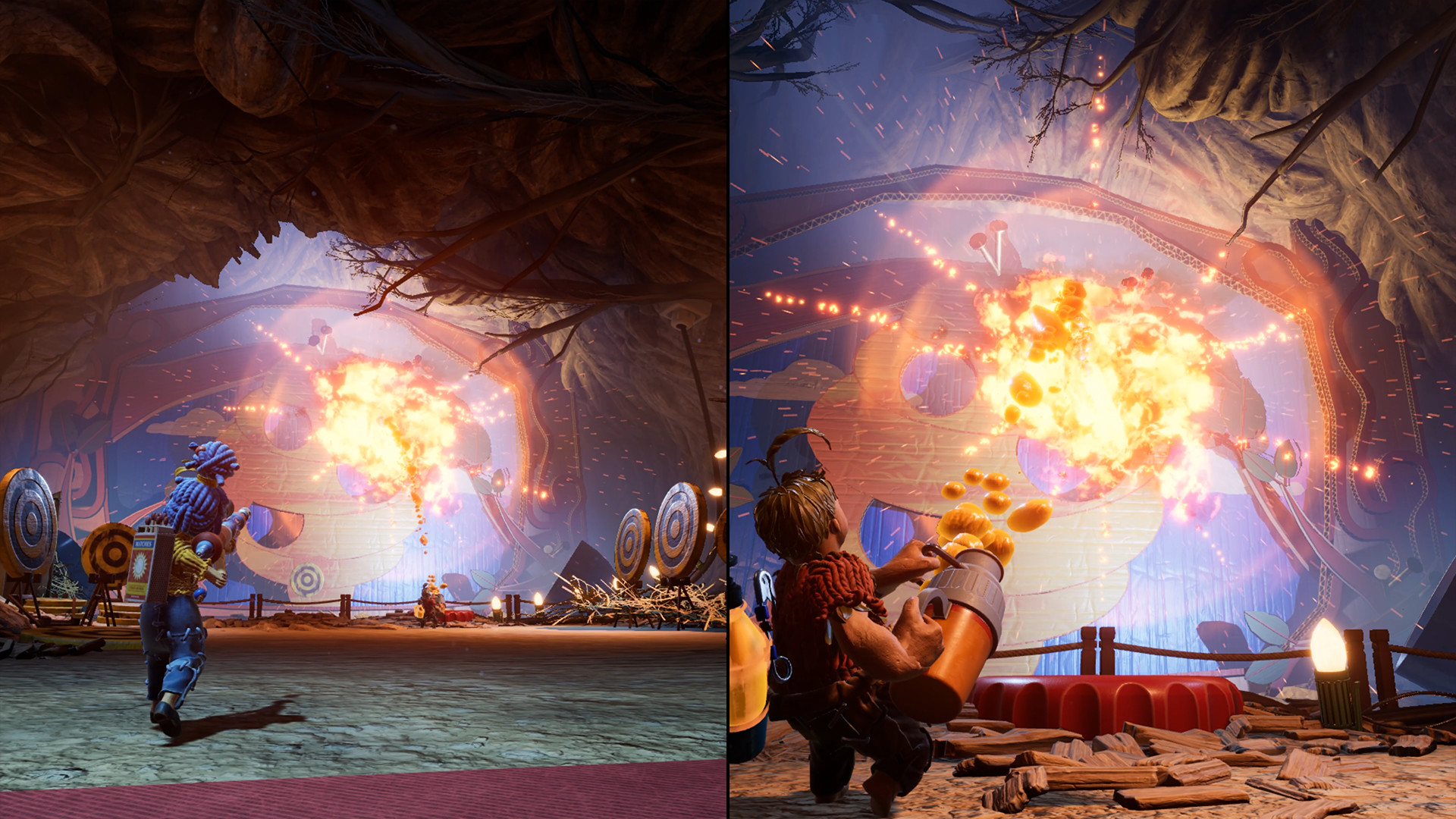
Although It Takes Two is primarily recognized for cooperative platforming and puzzles, combat encounters also test the relationship between individual ability and team coordination. Players must react to threats, understand the behavior of enemies, use their available tools, and avoid treating the encounter as two separate fights happening in the same space.
The difficulty often comes from attention. A player concentrating on an enemy's immediate attack may fail to notice the partner's position or the larger pattern of the encounter. Meanwhile, a player focused on helping their partner can miss an opening to attack or move to safety.
Successful combat requires each player to maintain awareness of both the immediate threat and the cooperative objective.
Assigning Roles Without Making Them Permanent
Some encounters naturally encourage temporary role specialization. One player may focus on creating an opening, while the other exploits it. In another situation, both players may need to attack separate targets or respond to different hazards.
The important word is temporary.
A team should not assume that one person must always handle offense while the other provides support. The game changes its tools and encounter structures often enough that rigid roles can become counterproductive.
Instead, players should identify the demands of the current encounter and divide responsibilities accordingly.
The Importance of Recovery
Mistakes during combat often create a secondary coordination problem. One player may be displaced, interrupted, or unable to contribute effectively while the other continues acting.
Rather than continuing with a plan that depended on both players being ready, the team should reassess the situation.
A simple recovery process works well:
- Identify which player can currently act effectively.
- Determine whether the original strategy is still possible.
- Move into a safer position if necessary.
- Re-establish the intended sequence.
- Resume coordinated actions.
The best teams are not those that never make mistakes. They are those that recover without turning one mistake into several more.
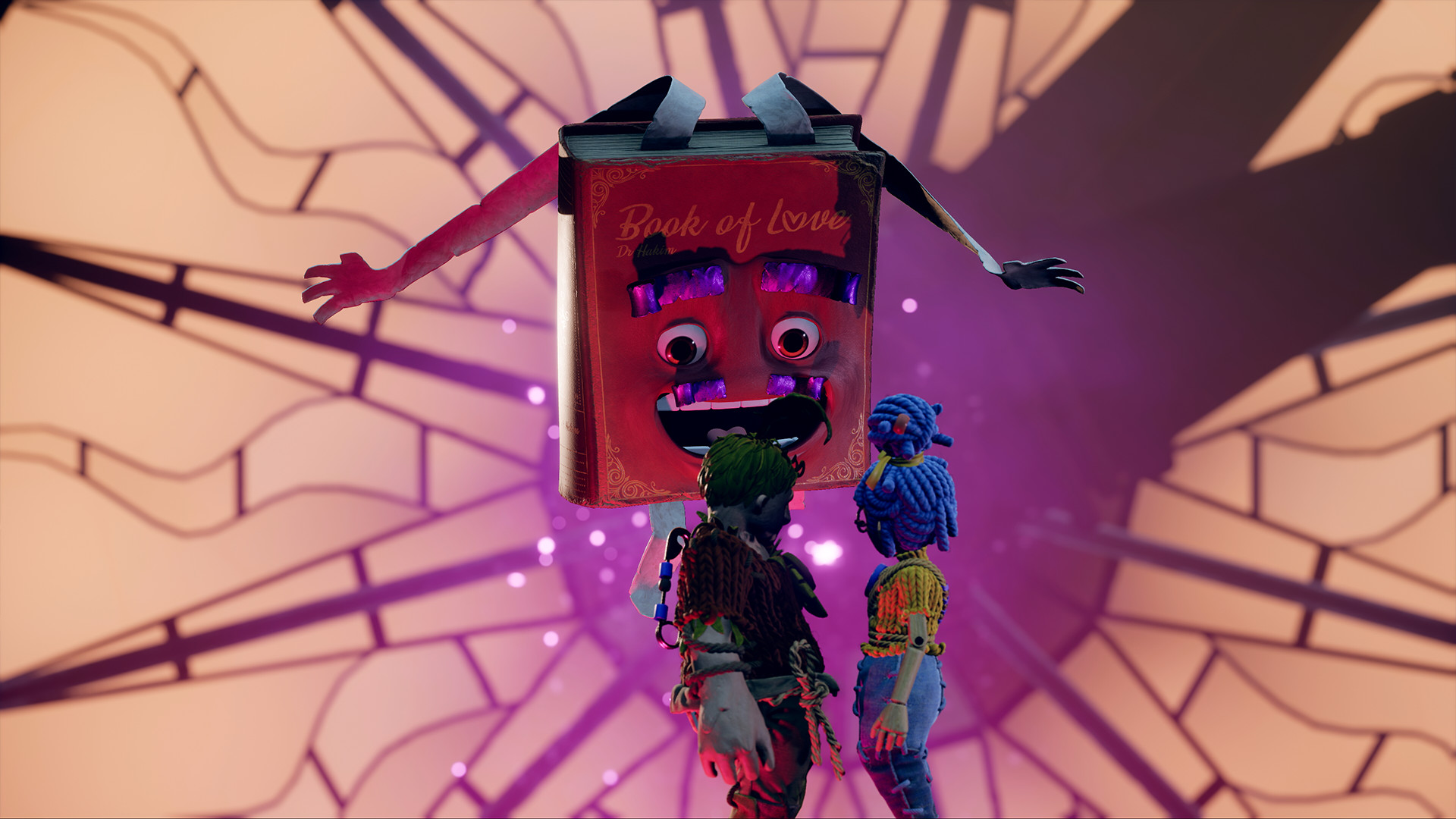
6. Platforming Sections: Timing, Momentum, and the Cost of Moving Too Early
Platforming creates a different kind of cooperative difficulty because the correct solution may be understood by both players, yet the sequence can still fail through inaccurate movement or mistimed actions. A jump may require precise positioning, a moving platform may provide only a limited opportunity, or one player may need to wait until the other has completed a preceding action.
This is where communication must become more precise. General statements such as “go” may be insufficient if the players interpret readiness differently. One person may mean that the platform is available, while the other assumes the partner has already reached the correct position.
The team should therefore distinguish between being prepared, beginning an action, and confirming that the action has succeeded.
Synchronization Is More Than Simultaneous Button Presses
Not every cooperative sequence requires both players to act at exactly the same moment. Some require a specific order, while others depend on one player responding to an event caused by the other.
Understanding the timing relationship matters more than attempting to synchronize everything indiscriminately.
For example, one player may need to activate a mechanism first, then wait for a visual change before the other moves. If both players act simultaneously, the second player may begin before the route is ready.
The most reliable method is to use clear action stages: prepare, activate, confirm, and move.
Managing Repeated Failures
When a platforming sequence fails several times, players should avoid immediately repeating the same attempt at greater speed. They should identify exactly where the sequence breaks down.
Useful questions include:
- Is the starting position correct?
- Is the first action being activated too early?
- Is one player moving before the mechanism has finished?
- Is the jump itself inaccurate?
- Does the partner need more time to prepare?
This converts failure into information.
Instead of saying, “That did not work,” the team can identify a specific cause and make a targeted adjustment.
7. Communication Under Pressure: How Small Misunderstandings Become Major Failures
Communication is one of the most underestimated mechanics in It Takes Two. The game does not merely require two players to talk. It requires them to exchange the right information at the right time, especially when the environment is changing quickly.
Too little communication leaves players guessing about intentions. Too much communication can become distracting, particularly during platforming or combat sequences that require immediate reactions. Effective teamwork depends on finding a balance between explaining the plan and leaving enough mental space to execute it.
Use Short, Actionable Information
During a difficult sequence, concise statements are usually more effective than lengthy explanations.
Examples include:
- “I am in position.”
- “Activate it now.”
- “Wait for the platform.”
- “Your side is ready.”
- “I missed the jump; reset.”
- “Let us try the other route.”
These statements communicate the information that changes the next action.
Longer explanations are better suited to moments when both players can safely stop and discuss the puzzle.
Separate Blame From Diagnosis
A failed attempt can easily become personal. One player may feel that the other moved too slowly, misunderstood an instruction, or failed to use an ability correctly.
However, blaming the partner does not explain the failure.
A more useful response is to identify what happened and decide how to change the next attempt.
Instead of saying, “You always move too early,” say, “I think the platform needs to finish moving before you jump.”
The second statement describes a testable hypothesis.
A Simple Post-Failure Review
After a failed attempt, answer three questions:
- What did we expect to happen?
- What actually happened?
- What single adjustment should we test next?
This prevents frustration from replacing problem-solving.
8. Optional Activities and Minigames: Competition Can Strengthen or Weaken Cooperation
It Takes Two includes optional minigames and playful competitive activities alongside its cooperative progression. These activities provide a contrast to the main adventure because they allow the players to compete rather than always working toward the same immediate objective.
This contrast can strengthen the overall experience. Cooperative puzzles reward mutual assistance, while competitive minigames allow players to test individual skill against each other. The change in relationship keeps the experience from becoming a continuous sequence of identical cooperative tasks.
However, competition also changes how players interpret success and failure.
Competition Should Not Replace Teamwork
A player who loses a minigame may feel frustrated, particularly if the other player has stronger reflexes or more experience with the controls. If that frustration carries into the main adventure, it can make subsequent cooperative sections less enjoyable.
The solution is to recognize that different activities test different skills. Winning a reaction-based minigame does not automatically make someone better at cooperative reasoning, and solving a complex puzzle does not guarantee superior platforming execution.
The game is more rewarding when both players appreciate these differences rather than treating every activity as a universal measure of ability.
Use Minigames to Learn Each Other's Strengths
Competitive activities can also reveal useful information about a partner's play style.
One player may react quickly but become impatient during puzzles. Another may move cautiously but recognize environmental patterns effectively.
Understanding these differences can improve cooperation later. The faster player might help with timing-sensitive sections, while the more observant player may identify the correct mechanism or route.
The objective is not to assign permanent rankings.
It is to discover how different strengths can contribute to a shared experience.
9. Difficult Sections: Building a Repeatable Method for Solving Complex Challenges
As players become familiar with the game's systems, they can begin using a more structured approach to difficult encounters. Rather than relying entirely on instinct, they can treat each challenge as a sequence of smaller problems.
This is particularly useful when a puzzle combines movement, timing, environmental interaction, and asymmetric abilities. Trying to solve every element simultaneously can overwhelm both players, especially when a failed action forces them to repeat a lengthy sequence.
Breaking the challenge into smaller parts reduces the amount of information the team must process at any one moment.
Divide the Puzzle Into Stages
A complex challenge can often be approached through four stages:
Stage One: Discovery. Identify the relevant objects, abilities, and environmental clues.
Stage Two: Planning. Decide which player handles each action and determine the required order.
Stage Three: Execution. Carry out the plan while communicating important changes.
Stage Four: Review. If the attempt fails, identify the cause and modify the plan.
This method is valuable because it prevents players from confusing an incorrect solution with an incorrect execution. If the plan itself is wrong, better timing will not solve the puzzle. If the plan is correct but execution fails, the team should focus on positioning or coordination instead of starting its reasoning from zero.
Know When to Change the Plan
Persistence is useful only when the current approach has a reasonable chance of succeeding.
If repeated attempts reveal that a strategy is based on an incorrect assumption, the team should return to observation. A mechanism may affect a different object than expected, an ability may have a limitation that was overlooked, or the players may have misunderstood the order of actions.
The most efficient teams alternate between persistence and reassessment.
They do not abandon a good strategy after one mistake, but they also do not repeat a demonstrably incorrect approach indefinitely.
10. The Final Lesson: Successful Cooperation Is a System, Not a Single Skill
By the later stages of It Takes Two, the central challenge is no longer simply learning how to jump, attack, or activate mechanisms. The players must combine everything they have learned into a flexible cooperative system.
That system includes environmental awareness, communication, individual execution, shared planning, role adjustment, and the ability to recover from mistakes. None of these skills is sufficient by itself. Excellent movement cannot compensate for a misunderstanding about the objective, while perfect puzzle reasoning cannot compensate for a complete lack of coordination during execution.
The strongest partnership is therefore not necessarily the one in which both players possess identical abilities. It is the one in which both players understand how their differences can support the same goal.
A Practical Framework for Every New Challenge
Whenever a new puzzle or encounter begins, players can ask:
- What is the immediate objective?
- Which abilities does each player have?
- What must happen before the next action becomes possible?
- Which information does my partner need from me?
- What happens if either player makes a mistake?
- Is our current plan still working?
These questions create a consistent method without removing the game's sense of discovery.
Cooperation Without Micromanagement
There is also an important balance between helping and controlling a partner. Constant instructions can make the less experienced player feel like an assistant rather than an equal participant. On the other hand, refusing to communicate can force both players to rediscover information that one already understands.
Effective cooperation lies between these extremes.
Explain the important relationship, allow the partner to perform their role, and provide additional guidance when the situation requires it. This preserves individual agency while maintaining the coordination needed for success.
Ultimately, It Takes Two demonstrates that cooperation is not simply two people performing different actions at the same time. It is a process of creating a shared understanding, testing that understanding against the environment, and improving the plan whenever the results differ from expectations.
Conclusion
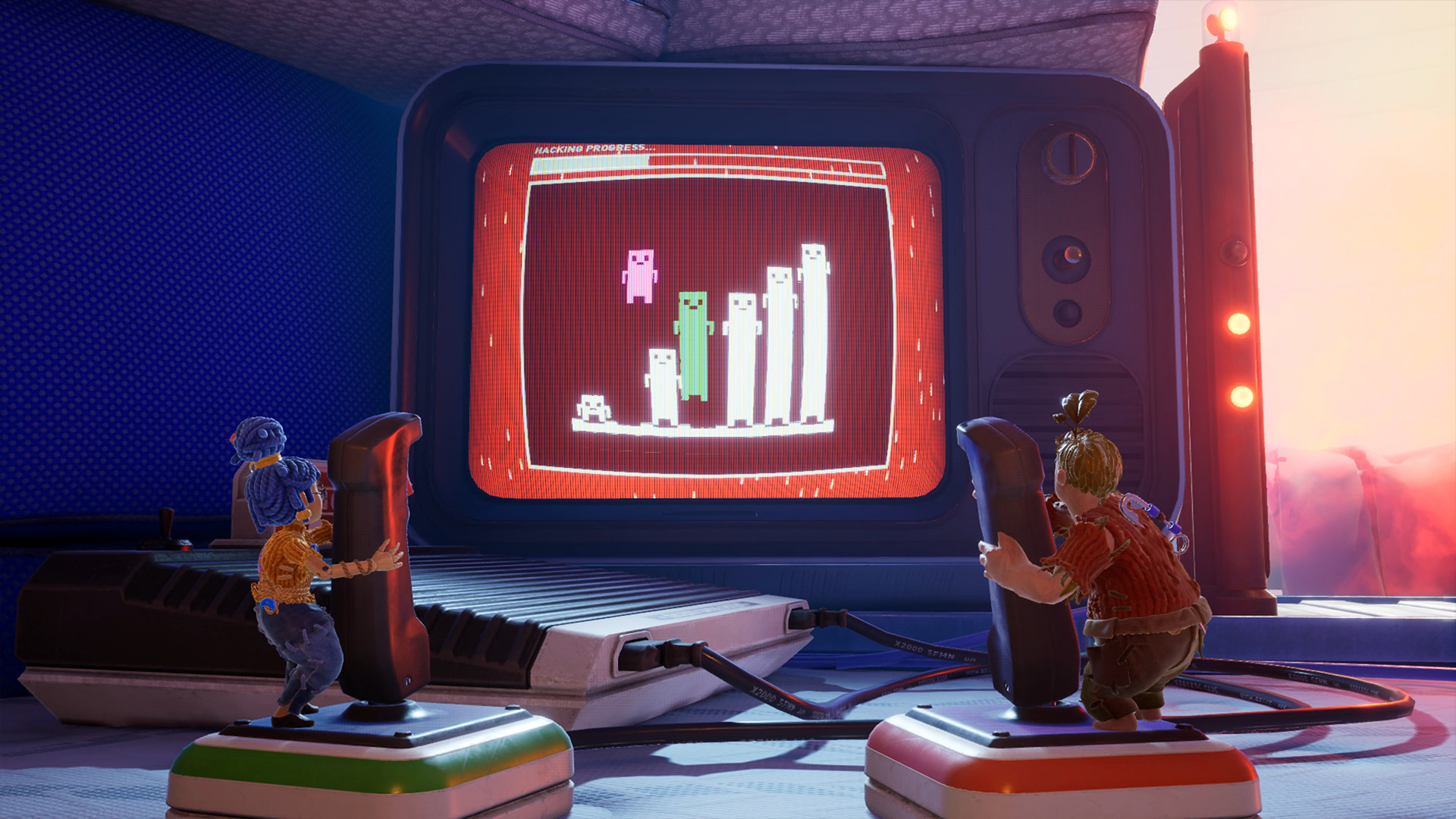
The deepest challenge in It Takes Two is the design and execution of asymmetric cooperation. Its puzzles, platforming sequences, combat encounters, and constantly changing abilities repeatedly force players to confront the same question: how can two people with different information, different skills, and different reactions coordinate their actions toward one shared objective?
The answer is not simply better reflexes or faster movement. It is a combination of observation, communication, timing, and structured problem-solving.
At the beginning, players learn to recognize each other's abilities and understand that individual progress often depends on a partner. As the adventure develops, they must adapt to new tools, distinguish cooperation from synchronization, and learn when to divide responsibilities or work together directly. Combat and platforming introduce execution pressure, while optional minigames reveal how differences in individual skill can coexist with successful teamwork.
The most important improvement comes from changing how failure is interpreted. A failed attempt should provide information about timing, positioning, mechanics, or communication. When players identify the cause instead of assigning blame, they can make targeted adjustments and build more reliable strategies.
This approach also prevents one player from dominating every decision. A strong cooperative partnership allows both participants to understand the solution, contribute meaningfully, and develop confidence in their own responsibilities. Guidance becomes more effective when it explains the underlying principle instead of dictating every movement.
Ultimately, It Takes Two succeeds because it makes cooperation an active part of gameplay rather than a background requirement. The characters may have different abilities, but their differences are precisely what make many challenges possible. Progress depends on recognizing how individual actions connect, communicating at the right moment, and adapting when a shared plan fails.
The broader lesson extends beyond the game itself: successful teamwork does not require two people to think identically. It requires them to understand each other's contributions well enough to combine different strengths into a reliable process.
In It Takes Two, the winning strategy is not for one player to become the expert and the other to follow instructions. It is for both players to build a shared understanding of the challenge, execute their roles, and improve together.
That is what transforms two separate players into one effective team.